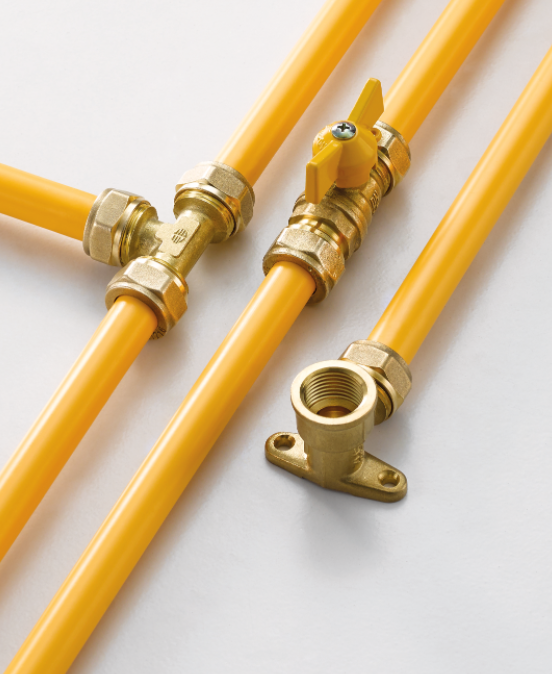

Multilayer gas piping systems integrate various materials, mainly inner high-density polyethylene and structural layers of aluminum or composites. These systems enhance safety and efficiency, exhibiting superior corrosion resistance, durability, and environmental compatibility compared to traditional options like copper and steel. They are lightweight, simplifying installation in confined spaces, while reducing maintenance costs and environmental impact. Innovations continue to advance their protective features and performance, making them a future-proof choice for diverse applications. Discover more about their benefits across sectors.
Key Takeaways
- Multilayer gas piping systems combine materials like high-density polyethylene and aluminum for enhanced durability and flexibility in gas distribution.
- These systems offer superior corrosion resistance, reducing maintenance costs and extending operational life compared to traditional piping materials.
- Lightweight design simplifies installation in confined spaces, leading to faster setup times and reduced labor costs for residential and commercial applications.
- Compliance with safety standards ensures secure connections and minimizes operational risks associated with gas distribution.
- Ongoing advancements in material science promise continued improvements in performance, sustainability, and environmental impact for future gas distribution solutions.
Introduction
Gas piping systems play a critical role in the efficient and safe transportation of fuel gas across residential, commercial, and industrial applications. The design and material selection of these systems are paramount, emphasizing corrosion prevention and material compatibility to enhance system longevity.
Adhering to regulatory standards ensures that installations not only meet safety requirements but also mitigate environmental impact by reducing potential leaks and emissions. Various materials, including steel, plastic, and composite options, each possess unique benefits and drawbacks, necessitating careful evaluation for specific applications.
Ideal gas piping systems integrate advanced technologies and materials that extend operational life while minimizing maintenance. Consequently, a thorough understanding of these factors is essential for professionals aiming to achieve mastery in gas distribution systems.
What Are Multilayer Gas Piping Systems?
Multilayer gas piping systems represent an innovative solution in the field of gas transportation, integrating multiple materials to enhance performance and durability. These systems typically consist of an inner layer made from high-density polyethylene or similar materials, sandwiched between structural layers of aluminum or composite materials.
This innovative design not only improves flexibility and resistance to environmental impacts but also meets stringent regulatory standards. A thorough cost analysis reveals that multilayer systems often reduce installation time and maintenance costs over their lifecycle.
As industry trends shift towards more sustainable solutions, multilayer gas piping systems are poised to minimize the environmental impact of gas distribution, aligning with future trends in energy efficiency and safety.
Key Material Options for Gas Pipes
The selection of materials for gas pipes plays a critical role in ensuring safety, efficiency, and longevity of gas delivery systems.
Key options include black iron for its durability, copper for its corrosion resistance, steel for high-pressure applications, polyethylene for underground installations, and aluminum-plastic composites for enhanced flexibility.
Each material presents unique advantages and limitations that must be carefully considered based on specific application requirements.
Black Iron
Black iron pipe, a prevalent choice in gas piping systems, is renowned for its exceptional durability and strength, making it suitable for the transportation of natural and propane gas. Its resistance to high pressures and temperatures enhances its reliability in various applications.
However, corrosion protection remains a critical concern; mitigating rust through appropriate coatings is essential for longevity. A thorough cost analysis indicates that while initial expenses may be higher, the durability often results in lower lifetime costs.
Adherence to regulatory standards ensures safety and compliance. As the industry evolves, future innovations such as improved protective coatings and alternative materials may further address environmental impact and performance challenges, optimizing black iron’s role in gas distribution systems.
Copper
Copper, historically favored for its application in plumbing, has also found a niche in gas piping systems due to its properties that enhance durability and resistance to corrosion. This material presents several advantages:
Exceptional corrosion resistance, ensuring longevity.
Reliable installation techniques such as brazing and soldering.
High material durability, suitable for varying environmental conditions.
Minimal environmental impact compared to other materials.
Effective leak detection capabilities, essential for safety.
Copper pipes are particularly suited for residential applications, offering flexibility and robustness. However, the rising costs and potential damage during installation necessitate careful handling and professional installation practices to maintain system integrity and prevent leaks.
Steel
Steel pipes are a fundamental choice in gas piping systems due to their outstanding strength and resistance to corrosion. Their exceptional durability factors make them ideal for high-pressure applications, including industrial settings.
While the installation flexibility of steel piping can be somewhat limited compared to other materials, advancements in techniques have improved adaptability in various environments.
A cost comparison reveals that steel may initially be more expensive; however, its longevity and minimal maintenance needs contribute to a favorable lifecycle cost.
Additionally, steel’s environmental impact is mitigated when considering its recyclability.
PE Pipes
Polyethylene (PE) pipes represent a versatile option in gas piping systems, particularly well-suited for underground applications. Their unique properties contribute to enhanced piping system durability and material compatibility, making them a preferred choice in various installations.
High resistance to corrosion and environmental degradation
Lightweight, facilitating easier handling and installation
Compatibility with advanced leak detection methods
Compliance with stringent regulatory standards
Minimal environmental impact, promoting sustainability
These attributes allow PE pipes to maintain integrity in diverse conditions, ensuring long-term efficiency. Their installation minimizes disruptions, while their robust performance supports safety measures in gas distribution networks.
Consequently, PE pipes are a critical component in modern gas infrastructure, aligning with both operational efficiency and environmental responsibility.
Aluminium-Plastic Pipes
Aluminium-plastic pipes represent an innovative solution in gas piping systems, effectively combining the advantages of both materials. Their design enhances corrosion resistance, ensuring longevity and reliability in gas distribution.
With advanced installation techniques, these pipes facilitate quick and efficient assembly, minimizing labor costs. The material durability of aluminium-plastic pipes allows them to withstand varying environmental conditions, making them suitable for diverse applications.
A thorough cost analysis reveals that, despite a potentially higher initial investment, the reduced maintenance requirements and extended lifespan offer significant long-term savings.
Additionally, the environmental impact is favorable, as these pipes are typically lightweight and recyclable, aligning with sustainable practices in gas distribution systems.
Comparison with Traditional Piping Systems
While traditional piping systems, such as copper and steel, have long been utilized for gas transportation, their limitations regarding weight, installation complexity, and susceptibility to corrosion highlight the need for alternative solutions.
Traditional gas piping systems face significant challenges, prompting the need for innovative alternatives to improve efficiency and durability.
The comparison between multilayer gas piping systems and conventional materials reveals significant advantages:
Enhanced corrosion resistance reduces degradation and prolongs service life.
Lower installation complexity minimizes labor costs and project duration.
Lightweight design facilitates easier handling and installation in tight spaces.
Environmental impact is mitigated through reduced resource consumption.
Cost comparison favors multilayer systems due to lower maintenance requirements and longer durability.
These factors illustrate the shift towards multilayer gas piping systems as a more efficient and sustainable solution in gas distribution applications.
Installation and Safety Considerations
When considering the installation of multilayer gas piping systems, it is vital to adhere to established safety protocols and industry standards to guarantee maximum performance and reliability. Key factors include ensuring pipe joint integrity and implementing effective corrosion prevention measures. Adopting advanced installation techniques can enhance system longevity, while regular system inspection is crucial for identifying potential issues early. Compliance with safety standards mitigates risks, ensuring a safe operational environment.
| Consideration | Description | Importance |
| Pipe Joint Integrity | Ensures secure connections and minimizes leaks | Critical for safety and efficiency |
| Corrosion Prevention | Utilizes protective coatings and materials | Extends the lifespan of the system |
| Installation Techniques | Employs best practices for optimal setup | Reduces maintenance and failure risks |
Applications Across Sectors
Multilayer gas piping systems find extensive applications across residential, commercial, and industrial sectors, each presenting unique demands and standards.
In residential settings, these systems offer efficient gas delivery for appliances, while commercial applications prioritize flexibility and compliance with safety regulations.
Industrial uses typically require robust and durable solutions capable of withstanding high pressures and temperatures, underscoring the importance of material selection and installation practices tailored to specific environments.
Residential:
How do various gas piping systems enhance residential applications? Advanced multilayer gas piping systems provide significant advantages in residential settings, emphasizing safety and efficiency. Their design incorporates improved corrosion resistance and material durability, ensuring long-term performance.
Efficient gas distribution to appliances like stoves and water heaters
Compliance with stringent regulatory standards for safety
Optimized installation techniques that minimize labor and time
Reduced environmental impact through eco-friendly materials
Enhanced flexibility, allowing for adaptation in complex residential layouts
These features collectively support a reliable gas supply, while innovative installation techniques further mitigate potential risks, ensuring that residential gas distribution meets modern safety and performance expectations.
Commercial
What benefits do advanced gas piping systems offer in commercial applications across various sectors? These systems enhance operational efficiency through superior corrosion resistance, considerably extending lifespan and reducing maintenance costs.
A thorough cost analysis indicates that initial investments in multilayer gas piping can yield long-term savings by minimizing leaks and downtime. Moreover, the environmental impact is notably reduced, as these systems help lower greenhouse gas emissions compared to traditional materials.
Compliance with stringent regulatory standards ensures safety and reliability, fostering stakeholder confidence. Future developments in material science promise even greater improvements in performance and sustainability, solidifying the role of advanced gas piping systems as integral components in modern commercial infrastructure.
Industrial
In industrial applications, advanced gas piping systems play a critical role in enhancing operational efficiency and safety across various sectors. These systems are engineered to meet specific requirements, ensuring seamless integration into complex environments.
Key considerations include:
High corrosion resistance to prolong service life.
Material compatibility to prevent chemical interactions.
Robust pressure ratings for safe operation under varying conditions.
Management of thermal expansion to maintain system integrity.
Assessment of environmental impact to comply with regulations.
Frequently Asked Questions
What Are the Environmental Benefits of Multilayer Gas Piping Systems?
Multilayer gas piping systems considerably enhance sustainability by reducing the carbon footprint through improved insulation, promoting resource conservation via durable materials, and minimizing pollution, thereby positively impacting ecological health and fostering a more sustainable future.
How Do Multilayer Systems Compare in Cost to Traditional Piping?
In cost comparison, multilayer systems often exhibit higher initial installation expenses due to advanced materials. However, long-term savings from reduced maintenance and improved efficiency can offset material costs, influencing budget considerations for sustainable gas distribution solutions.
Can Multilayer Pipes Be Used for Both Gas and Water?
Multilayer pipes exhibit dual functionality, effectively accommodating both gas and water applications. Their material compatibility enhances installation flexibility, while superior pressure tolerance and system versatility further establish them as a reliable choice for diverse distribution needs.
What Is the Lifespan of Multilayer Gas Piping Systems?
The lifespan of multilayer gas piping systems typically ranges from 30 to 50 years, influenced by durability expectations, material longevity, aging factors, and performance stability, necessitating periodic assessments to determine appropriate replacement intervals for ideal functionality.
Are There Specific Maintenance Requirements for Multilayer Gas Pipes?
Specific maintenance requirements for multilayer gas pipes include strict inspection protocols, proactive corrosion prevention, systematic leak detection, assessment of joint integrity, and adherence to a defined replacement schedule to guarantee operational safety and longevity.
Conclusion
In juxtaposition to traditional piping systems that struggle with corrosion and leak risks, multilayer gas piping systems emerge as a beacon of innovation. Their composite structure not only enhances durability and flexibility but also streamlines installation processes, ultimately redefining safety standards in gas distribution. As industries increasingly prioritize efficiency and reliability, these advanced systems represent a pivotal shift towards more resilient infrastructure, ensuring that the future of gas transportation is both smarter and safer.